Author: Lee

Goodwood Festival of Speed

Goodwood Festival of Speed

This is my thrid blog entry today, and I thought it was about time I added a few images that werent just rally cars.

Well the second day of the event provided a few challenges from a photography point of view.

bike.jpg

williams.jpg

The day started with some sun, but cloudy sky, but by 2pm, just in time for the Red Arrows, the heavens opened!

rain.jpg

It made for some interesting photos though!

rain2.jpg

Untitled-3 copy.jpg

These were new shiny Porches 3 hours earlier!

a muddy time.jpg

Then it started to dry out a bit in time for the F1 cars!

toyota1.jpg

ferrari.jpg

mclaren.jpg

It was a very good day, long and wet, but very good!

Too Blur 2

Too Blur 2

I wrote about images with blur the other day. Now when I was taking some images of the rally stage yesterday, I was really struggling with lack of light and shutter speeds, so I ended up with some more images with blur.

Does this work? I’m not sure, and not sure whether to put it on the main site.

Festival of Speed, Rally

What do you think?

The Missed Toyota

The Missed Toyota

When I was at the Festival of Speed yesterday, I was taking photos of the Rally stage, when another photographer came and stood next to me. She was taking photos for Toyota and so stayed there until one turned up. I had decided I wanted to get a photo of the Celica, however the first Toyota was an older car and I wanted the more rounded 90’s version. So she left having got the image she needed, but the next car to turn up was the Celica I wanted to photo.

So this is the one she missed!

toyota.jpg

I’ll write a bit more on this event later when I have finished going through my 600 images!

What a busy week!

What a busy week!

Its been a really busy week.  It all started on Sunday when I had to fly to Munich on business.  Normally business trips are to Finland, so this made a nice change.  I was for a 2 day workshop, Monday, Tuesday, so we had to fly on Sunday.  Luckily, Monday evening gave us time to visit Munich city centre.  I hadn’t been there before, so it was nice to get a chance to look around and take some photos.  I got a few good results!

Whilst being away, at the office our desks had been moved, so wednesday, after the Sky engineer had been about my sky problems, I had to unpack all the work stuff and set all that up. At home, I still don’t have a very good sky signal and in fact now don’t have any channels coming through.

Yesterday was the Charity Craft Event which went well but was very hectic getting it all sorted out.  Tomorrow is the festival of speed.  So what a busy week!

To Blur or Not to Blur

To Blur or Not to Blur

I always used to think that a good photo was one that was in focus and sharp. However, over the years the more photos I have looked and seen published in books, the more I noticed that this isn’t the case. I have seen photos that have creative blur that are published and look good, and others that just seem blurred that still get published.

Someone bought me a book full of wonderful wildlife photos, and the percentage of these that had creative blur on them was really quite high.

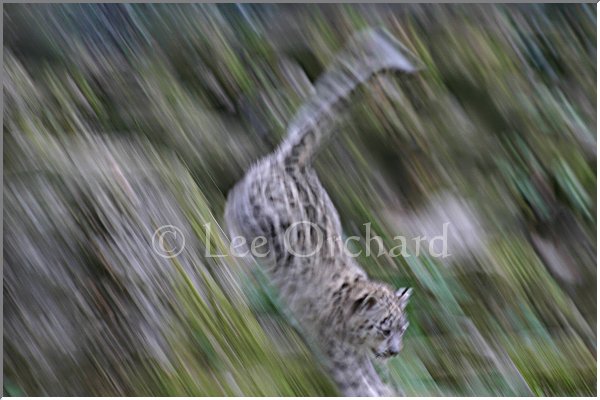
A few years ago, I took a photo at Marwell Zoo, of a Leopard cub jumping. It was the first time I had really used a DSLR, and I forgot that I could change the ISO. When reviewing the photos later, I was disappointed to see it blurred. About a year or so later I looked at it again and thought, well maybe it wasnt as bad as I first thought, so added it to my website.

I was talking to a photographer one day and he had a look through my website. Out of the images that were on it at the time, he said, ‘I really liked the photo of the cub jumping’. I was quite surprised, but also pleased.

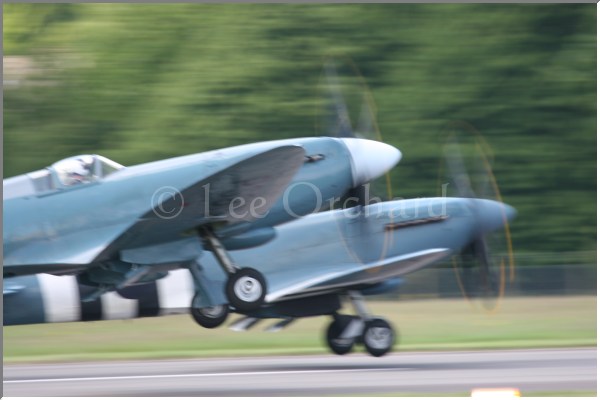
So, my trip to Biggin Hill. Yes, admittedly a lot of these were just wrong, not creative blur, just blurred through using the wrong shutter speed. When I first looked at the photo of the Spitfires taking off, my heart sunk, as I thought, what a shame, I wished I had realised the shutter speed was too slow. This time though, the next day (not a year as before) I looked at it again and thought, no, actually that works, so I printed it, and it is also on the website.

It is now one of my favorites from that day.

So creative blur works, and sometimes so can normal blur. I like to think these are non planned creative blur images!

My New Lens

My New Lens

After booking tickets to the Festival of Speed in a couple of weeks, I had a dilema, which lens do I use?

My 100-400mm would be good if there are any air displays there, but it will be primarily cars, on the ground and close up! So, with the 100mm at the low end, it makes things too close. I could use my 28-200 but I don’t really like the lens, despite using it for many years.

So, I thought about buying a new lens. I wanted a Canon lens. A 70-200 lens made sense, but didn’t give me much extra at the low end on my 100-400, and at £1600, made it a non starter. The 28-135, was nice, but didn’t give me the wide angle.
So I decided to go for the Canon EF-S 17-85 IS lens, which meant I could finally replace the cheap kit lens I got with the 300D and it gave my extra at the top end. It also gives me an IS wide angle lens.

17-85.jpg

I wanted to try it out on Saturday, but by the time I managed to get to the local pond, it was dull and started to rain. On the way back, I noticed a sign for a Festival of Transport in Farnham the next day. Great and ideal opportunity!

These are a few of the results.

bus1.JPG

car1.jpg

car2.jpg

I found a good location on the corner and coupled with the wide angle aspect it gave interesting results when they turned! Also, Farnham is a nice old town, so there was nothing too modern in the images.
The thought the results were really crisp, and very good colours. A great lens!

Dead Pixels

Dead Pixels

One of the biggest worrys with the new display devices that we buy these days is dead pixels.  Our TVs are LCD or Plasma, the computer monitors are LCD, as are many handheld devices like image storage units, games consoles or even mobile phones.

These units use technology which is based on pixels.  Like if you look closely at a graphic on your computer monitor, the larger it gets the more blocky and squares you can see.  These are graphic pixels.  Its the same with display screen, thousand of minute squares, each on being a pixel, (a red-green-blue phosphor triad). This is what makes up a display screens resolution.  EG, 640×480 or 1280×1024.  These numbers are the x & y pixel numbers that make the resolution.

The higher the number in the x & y the higher the resolution, and normally (depending on the physical size of the screen) the better the picture.

These pixels are basically RGB switches, which show the correct colour depending on what signal is being sent to the display device.  A dead pixel cannot do this and so, on LCD will show as a white dot.  Depending on what you are viewing, this can be very annoying.  If you are just working on word processing documents, it probably doesn’t matter, but on a TV screen or looking at photos, your dont want to see a bright white dot. Plasma dead pixel go dark.

Now cameras are all based on these mp (mega pixel) rating these days, and many of them are 8mp or 10mp.  This is millions of pixels with a x & y value of 3504×2336 or above. This resolution is on the sensor, not the screen so is more important.

A dead pixel on a camera, will mean that the sensor doesn’t record any data in that pixel location when a photo is taken.  This again leaves a white dot.  Now if you are only printing images at 6×4 inches, it probably wont show to the downsizing when printing, but if you are printing large, then there is more chance of it being seen or if you look at it on a monitor

At least with images, you can clone out the dead pixel in a graphics package, but if you have lots to do, it becomes a problem.

Now the reason I am writing this, is a while ago I noticed a white dot on a few of my images, but then havent seen it for a while.  I then noticed 2 white dots on the images I took at Elstead, but it doesnt seems to be on all images.  So I’m a bit confused.  Maybe it is a lazy pixel, if such a thing exists, and only works occassionally, but there are definately 2!

On sensors pixels can be remapped so it displays the same colour and the pixel adjacent to it, but this needs to be done by the manufactuer.  Also, once the sensor starts to be mapped, does to cause other issues, I don’t know?  I also heard, that know sensor are perfect and many are remapping a few dead pixels when sold. The other issue is this could mean not have the camera for upto 3-4 weeks!  Its the wrong time of year for that.

So, I’ve now got to wait to hear how much and how long to see if it is worth doing yet or not.


Back to Nature with Dragons!

Back to Nature with Dragons!

After the last couple of days photographing and talking about aircraft (which have now been added to the Transport section), its back to wildlife.

Yesterday lunchtime I went for a walk to Fleet Pond, but I went a slightly different way. On the way back, I walked past a small stream and saw lots of Demoiselle Damselflies. There were Green, Blue ones and a Golden Orange & Green one! I also saw a few Dragonflies and one Lizard!
So, inspired by this, I headed to Elstead Nature Reserve last night to find some more Dragonflies. None! I saw nothing! So heading back to the car, I was about to give up, when I started to see some wildlife. (this always seems to be the way, nothing, and then lots at the end!) I saw I female Mallard sitting on her Chicks,

ducks.jpg

Then I found this Chaffinch singing in the tree.

chaffinch

chaffinch

I also came across these ducks fighting

ducks

and finally this Damselfly. Sadly I couldn’t get the depth of field deep enough, but its the features on the face that are good.

damsel

All in all, it turned out a good trip

Practice Makes Perfect

Practice Makes Perfect

I thought I’d have a look on the web today to see what results other people got from the airshow.

I was quite surprised.  It looks like people had similar issues to what I was struggling with.  However, I did find one web site where he had some excellent shots.  It looks like all he seems to take is aircraft, so has had a lot of practice.  I know if I had come away with some image like he had, I would have been over the moon.  Anyway, I am please with some or mine, even if there were what I was expecting. So  I am now quite looking forward to the next event, so I can put into practice what I learnt at the weekend.

I haven’t really tried to take photos at an airshow for 2 years, so I think maybe I got to caught up in the event and forgot to keep a close eye on my settings.  Also, the results I got too years ago were quite good, so I had higher expectations than I might have normally had.

Nevermind, practice makes perfect and there are few good events coming up, just some of them aren’t quite as close.

Biggin Hill, the Results

Biggin Hill, the Results

Well I went to Biggin Hill on Saturday, and what lovely weather for it.

So how did I get on? I took lots of photos, and got some good results, however I was a little disappointed as quite a few of the images didn’t turn out a well as expected.

I was hoping to get some good images of the Spitfires, sadly, this didn’t happen, and didn’t get many working images. This was partly due to the flight path they took and also due to me not getting my setting correct. The sun also made it difficult, as at one end it was over exposing a lot (especially on slow shutter) and the other end of the runway, they were under exposing
I also didn’t review my images enough, and being sunny and looking at the small lcd screen on the 20D, made it difficult to see the results. The problem was, yes, I got some nice blur on the props, but as the aircraft got closer, I should have increased the shutter speed, so got a blurred aircraft as well! A lesson learned! Also, I made the mistake of generally having the shutter speed to low, it dropped to 1/100, and I didn’t realise, so this effected a lot of the shots.

These were some of the better ones.

{Q-E}IMG_6441.jpg

{Q-E}IMG_6404.jpg
I also had problems with the Lancaster, again, a too slow shutter speed when trying to take it banking around at a distance. However, I got some really good close ups, and a very good one of it coming towards me. These images on here, are too small to do them justice, but I was pleased with this one.

{Q-E}IMG_6265.jpg

Now, once I had realised I had the shutter speed still set for the propeller aircraft and increased for the jets, I got some nice Red Arrow images.

{Q-E}IMG_6748.jpg

{Q-E}IMG_6774.jpg

I liked this one of them in a line.

I did manage to get some better images of the Kittyhawk and the Mustang. I think though one of my favorites is of the wing walker.

{Q-E}IMG_7218.jpg

I now want to try to go to another show and learn from what I did wrong here. I must keep an eye on the settings, and I believe a lot of the images would have been better if the shutter speed hadn’t dropped so slow. I would have been better off leaving it on auto, but would have possibly had some static looking images. One other good thing, is the I took so many images, it meant that I still have some good results, despite the other problems.

Its June!

Its June!

Crumbs, it June already!  Where is the year going? Its also my birthday next month, another year older!! Time does fly by. On the plus side, hopefully now that it is June, the weather should start to get better, which means I should be able to go out and about a bit more, and there should be lots of interesting things on and places to go.

So coming up, there is the Nokia Craft Fair (internal to the company), the Alton Show, Alton Craft Fair, Dunsfold Wings & Wheels, and many others!

Photographing Aircraft

Photographing Aircraft

Photographing aircraft can be a bit difficult. Based on past experience I have had some success and also some failures.

The first thing is trying to get the aircraft in the viewfinder and focused. I found, that just to get the shot, without worrying about composition, I set the camera to AF Servo mode and centre point focusing. This way I know that the camera will focus for me, and if I keep the aircraft in the centre of the frame, that’s where it will focus and not hunt on the other AF points. (of course it doesn’t always work, but at least you know what you are working with!)

Then, instead of just pointing the camera at the aircraft and keeping your finger half pressed to track the plane, I’ll focus on the plane as soon as it is big enough in the focus point, then lightly half press the shutter button, again and again, focusing in small increments. I found this works well with flying birds and with aircraft, instead of the camera doing all the work. This way, if theS aircraft slips off the focus point, there is less chance it will start to focus on something that doesn’t exist and so waste valuable time refocusing.

Next, exposure. The aircraft will normally be back lit, so a bit of overexposure is required making sure the sky doesn’t disappear to white, particularly on overcast and solid cloud days. A bit of blue sky is good, although can be boring so a bit of both is better.

Now, shutter speed. Not too much of an issue with jets. Keep it high, which it probably will be on auto, pointing it into the sky, but for older planes, like WWII, then you have the propeller issue and need a slower speed.

Too fast and you freeze the propeller, making it look like the aircraft is a static model, too slow and the whole aircraft is blurred. I’ve found between 1/125 & 1/320 seems to do the trick. It also seems to depend on whether the aircraft is coming toward you or passing. The Mustang in yesterdays blog, was coming towards me, and had a shutter speed of 1/640, leaving a little blur. I was lucky for the prop not to be frozen.This image shows a photo with cloud in it, compared to plain sky. It also shows one aircraft where the shutter speed was slightly too high and frozen the prop. The middle photo, seems just right with a shutter speed of 1/200

aircraft.jpg

I think the above is a good guide, but you need to review your images as you take them and make adjustments to the conditions at the time. Of course, doing all of this, whist not missing the aircraft you are trying to photograph that is still flying above you! Thats what I’ll be trying to do this weekend!!

Biggin Hill

Biggin Hill

Well the weather is still wet, however at the moment it looks like Saturday may be ok. Lets hope so, as I am still hoping to go to the Biggin Hill Airshow which is on all this weekend.

Now, I have been to a couple in the past an been lucky with the weather, however one I went to it bucketed it down at the beginning and I remember this poor guy having to fly in an open cockpit WWI tri-plane! I had to try and keep the camera out of the torrential rain, then try and get a photo when the aircraft was in the correct position so as not to get water on the lens. Get an interesting grainy photo though, where the graining was the rain!

triplane.jpg

I have quite good waterproof gear for myself, and some decent protection for the camera, put you still have to keep it off the lens. Luckily that time it didn’t last for long and made for interesting photos, but you don’t want it all the time.

This weekend at Biggin Hill, hopefully I should see, Spitfires, Lancaster, Mustangs, Red Arrows & a Typhoon. Never seen or photographed one of them! Ah, just realised, the Typhoon, is probably going to be the EuroFighter, not the WWII Typhoon, shame… Does a flying on of those exist?.. Short Answer: No.